Welcome To My Blog |
|
Welcome To My Blog |
|
|
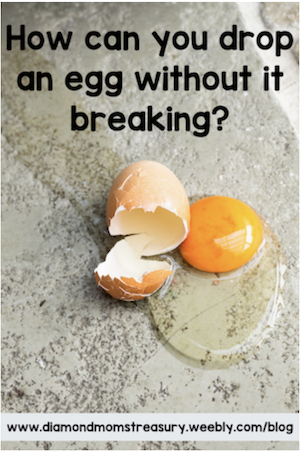
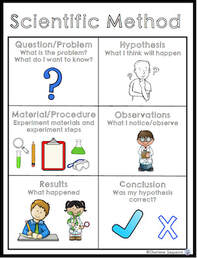
Happy New Year Everyone! Wishing you a prosperous and healthy 2024. I hope you had a wonderful Christmas season.  I have enjoyed sharing tips and ideas with you throughout the year and I look forward to continuing to share more this year. If you are still on holidays, enjoy them and remember to relax and refresh. If you are returning to work this week, I hope you have a pleasant week and that the rest of the school year is not too stressful. Try to enjoy the time with your students and remember to schedule in some time for yourself. 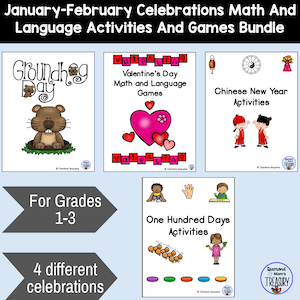 If you are looking for some activities that will be fun to do for the various celebrations in January and February, this bundle might work well for you.    Solar system projects are fun to do and they allow for student choice when selecting how they wish to share their knowledge. This has always be a great way to showcase my students to their parents, other students, and the school community. 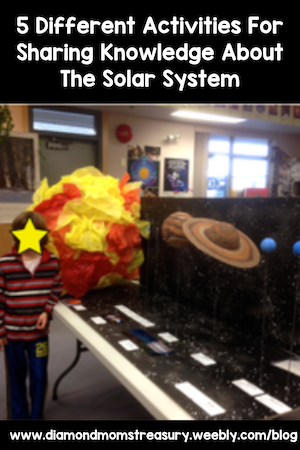 It's amazing how much young children can learn and how excited they can get about a subject when it is approached in this manner. Here is the project and options that I used. It's important to emphasize that no matter what form of project is selected, there is a presentation component that is included. This helps to demonstrate what has been learned and also allows for questions to be asked about the project. 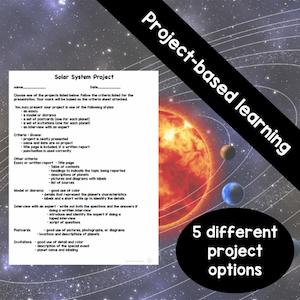 Written Report Or EssayThe traditional way to share research is through a written report or essay. Although this is a great way to share information, for some students it is difficult to do, especially when they are younger and emerging writers. If kids enjoy writing and sharing knowledge this way, the option should be provided for them. Here is my grandson with his report. He chose this option and was very proud of his presentation to the class and to the parents. 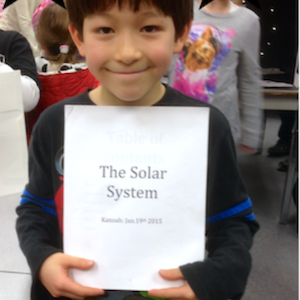 Model Or DioramaModels or dioramas are often popular because they are so visual. The key is to make sure that there are enough details or characteristics shown to help with identifying the planets. The descriptions and labels are also very important. 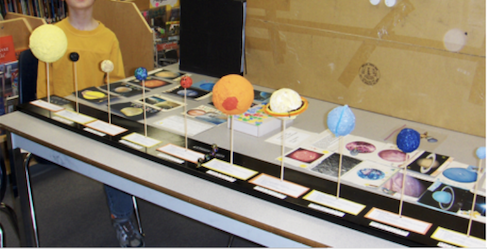 PostcardsCreating planet postcards is fun to do because it allows for some humor and captions. The idea is to take some key characteristics of the planet and use them in an imaginative way to capture the attention of others. Brochures Or InvitationsBrochures or invitations are another imaginative way to represent a planet. It is also a great way to demonstrate how to promote events or objects. 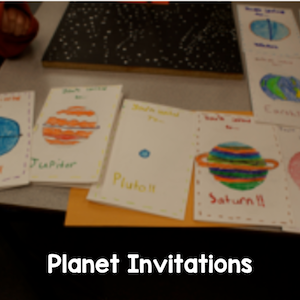 InterviewAlthough interviews are an option, this choice is rarely taken because there are not always experts nearby or accessible, however, if a child does have someone that they can connect with, it is a great way to learn more about the solar system from an expert. 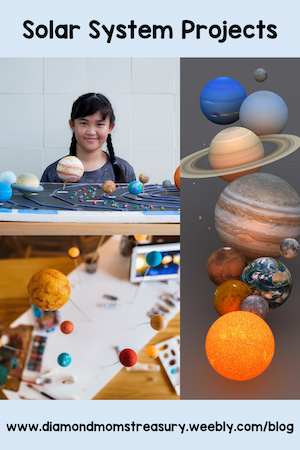 Solar System ResourcesHere are a couple of resources that make using projects work. Our Solar System Project is an outline of what is required, a letter to parents, a criteria outline with a simple marking sheet, a solar system test, and some sample photos of completed projects. The Solar System - Fun Activities For Learning About The Solar System And It's Planets is a new resource that has ready made templates that can accompany the projects or be used by themselves. Teaching young children about space and the solar system can be an exciting and awe-inspiring experience. Here are some creative ideas to make learning about space engaging for young learners. 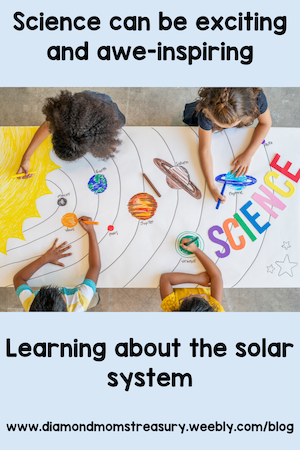 Sweet Moon PhasesLearning about the phases of the moon can be fun if you add in a little bit of sweetness. Try using cream filled cookies to show the different phases of the moon. The amount of cream on the cookie represents the fullness of the moon. It's a tasty and visual way to understand the moon's changing appearance. 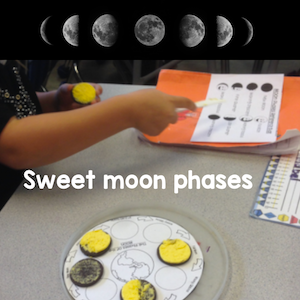 Solar System MobileHow many times have you seen a child's room decorated in a space theme? Kids love to imagine they are surrounded by the planets and the stars. What better way to create excitement and fun than to have each child make their own solar system mobile. Provide them with paper plates, paint, markers, and string. They can paint or draw the planets, cut them out, and hang them in order from the Sun to create a miniature representation of the solar system. 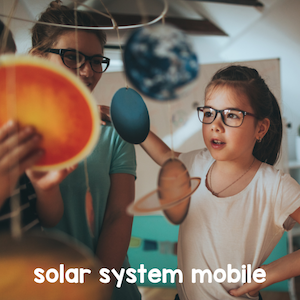 Alien SpaceshipsKids often imagine there are aliens on the different planets and they wonder if we will have visits from them someday. Creating alien spaceships is a fun way to let their imaginations live on. Here are some that my class made one year using the lids of slushy drinks and paper plates. 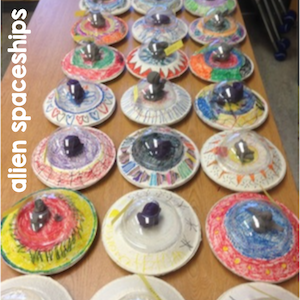 Space StoriesAs kids learn more about the different planets and the solar system, they can create space stories using some of the information they have learned. Make sure that they include some factual information in the stories but allow them to use their imaginations to create events that happen there based on the facts.  Moon Visits And Other Space AdventuresThe astronaut visits to the moon took place many years ago, so many children may not know much about them. They would probably enjoy watching video clips from the first steps on the moon and subsequent visits. They might also like to learn more about space trips to the space stations and what goes on there. Maybe they could even learn about the possibility of future space trips to other planets. 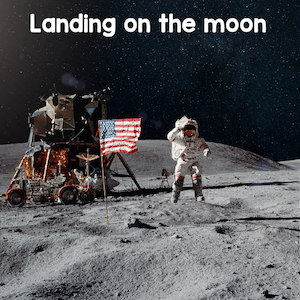 Research ExpertsThere are many books available that provide information about the inner and outer planets and what we know about them. It would take a long time to go through all of them and learn enough information about each if one person had to do it themselves, but if a group of people each took one or two planets, they could become the experts and share what they learn with the others. 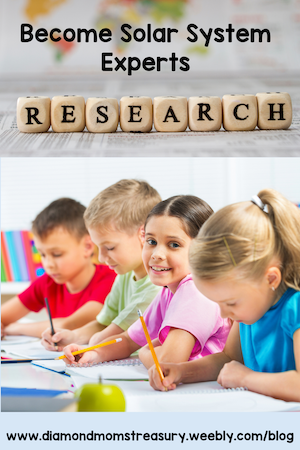 Mixing fun imaginative activities with research will engage and entertain your students as you venture into the worlds beyond. After exploring and broadening the wonders of space, try doing a project that demonstrates what has been learned. Doing a project about the solar system with multiple ways of sharing what was learned is a great way to culminate your space unit. This was one of my favorite projects and each time my class did it, the results were incredible. Check out my next blog post for more.details. Have fun with your explorations of space! Related Posts Hands-on science activities engage our children and encourage their curiosity. Here are some simple and fun science experiments that require minimal materials but address many questions that kids have pondered. Let's embark on a journey of discovery and learning!  Balloon Rockets (Force Experiment)Question: How does the size of the balloon affect the distance the rocket travels? Hypothesis: The larger balloon (will/will not) make the rocket travel farther. Materials: balloons, string, straw, tape, measuring tape Procedure: 1. Tie one end of the string to a chair, door knob or something that can support it. 2. Slip the straw onto the string at the other end. 3. Tie the other end to another support so that the string is taut. 4. Inflate balloons of different sizes (pinch them closed, don't tie them), attach them to the straw with tape, release them and measure the distance each one travels. Observations: Measure distances each balloon rocket travels and record the results.. Conclusion: Analyze the data and determine if the hypothesis was correct or not. Discoveries: As the air rushes out of the balloon it creates a force motion called "thrust" that propels the balloon forward. The size of the balloon will determine the amount of thrust provided and how far the balloon will travel. 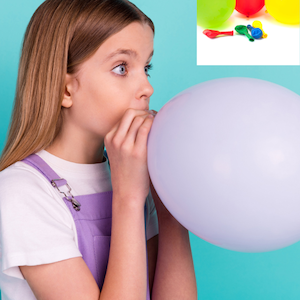 Egg Drop Challenge (Gravity Experiment)Question: Can an egg be dropped from a rooftop without breaking? Hypothesis: With the right materials and design, the egg can be protected from breaking when dropped. Materials: Eggs, various materials for padding (e.g., cotton balls, bubble wrap, foam, tissue paper) tape, string, plastic bags, small boxes, other household materials for building a protective structure, ladder or access to a roof Procedure: 1. Create a protective structure to hold the egg 2. Attach the egg 3. Drop the structure from the roof Observations: Record the type of material and structure created to protect the egg. Record whether to the egg remained intact or broke. If this was done with several different structures, record each one and the results. Conclusion: Identify the materials and design strategies that were most successful in protecting the egg from breaking during the drop. Review the hypothesis and answer the question. Discoveries: By attempting to drop eggs from a height, students experience firsthand the force of gravity and the need to counteract it to protect fragile objects. The conclusion can highlight how different materials and design elements can effectively absorb and distribute the force of impact. 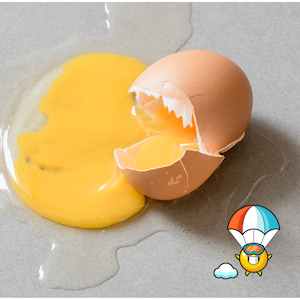 Sink Or Float (Buoyancy Experiment)Question: Which objects float and which objects sink? Hypothesis: I think _____ will float and _____ will sink. Materials: Various objects of different materials (plastic, wood, metal, cork, etc.), large container of water Procedure: Place one object at a time in the container of water Observations: Observe and record whether the object floats or sinks. Categorize the objects as floaters or sinkers based on the observations. Conclusion: Determine which objects float or sink and compare the results with the hypothesis. Discoveries: The children will learn that shat, size and material of an object can determine whether it floats or sinks. Objects with lower density than water float (such as cork or plastic), while objects with higher density (such as metal, or stone),sink. Note: The results can change if the density of the water changes (salt water is denser than fresh water). 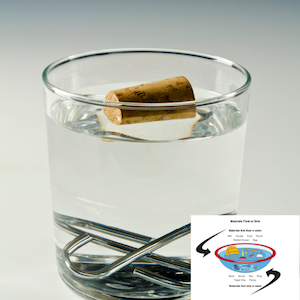 Layered Liquids (Density Experiment)Question: How do different liquids of varying densities interact when layered? Hypothesis: Predict the order in which liquids will layer based on their densities Materials: various liquids (water, cooking oil, honey, dish soap, food coloring), tall transparent container Procedure: 1. Fill the container 1/3 full with water. 2. Pour different liquids , one by one, into the container. Add a few drops of food coloring to each layer. Observations: Record the order that the liquids are added and how they settle. Examine the layered liquids and their densities noting any patterns or differences. Conclusion: Determine the order of the liquids and compare them with the hypothesis. Discoveries: The children will observe that different liquids do not mix easily and form distinct layers. They will also see how light interacts with the layers to create a rainbow-like effect. Liquids that are heavier (denser) sink to the bottom, while liquids that are lighter (less dense) stay on top. 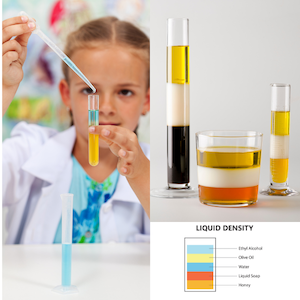 Volcanic Eruption (Chemical Experiment) Question: What happens when you combine baking soda and vinegar? Hypothesis: I think they will react together. Materials: baking soda, vinegar, red food coloring, playdough or something that can be shaped to look like a volcano, container to place under the volcano shape, spoon Procedure: 1. Create a volcano shape using playdough or a model and place it in a container. 2. Measure and add baking soda inside the volcano structure. 3. Add some red food coloring to the baking soda. 4. Pour vinegar on top of the baking soda and observe the reaction. Observations: Record what happens when the vinegar mixes with the baking soda. Collect data of what you see. Examples: Upon pouring vinegar onto the baking soda, there was an immediate reaction. Bubbles and fizz were produced, resembling a mini volcanic eruption Conclusion: Mixing the vinegar with the baking soda created a chemical reaction that caused bubbles of gas to form. Discoveries: When an acid (vinegar) is combined with a base (baking soda) it creates a chemical reaction that produces carbon dioxide gas. The gas is released as bubbles causing a forming reaction.This gas expands and causes the foam to flow from the volcano. 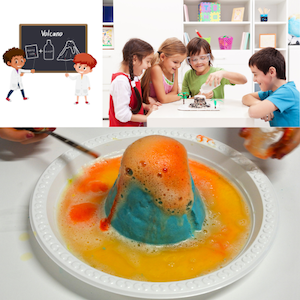 These simple and enjoyable experiments provide a hands-on approach to teaching fundamental scientific principles. By engaging in these activities, children not only gain a deeper understanding of concepts like force, gravity, density, and chemical reactions, but they also develop essential skills such as observation, classification, and critical thinking. We can foster a love for science early on, using hands-on activities and create a lifetime of curiosity and exploration. 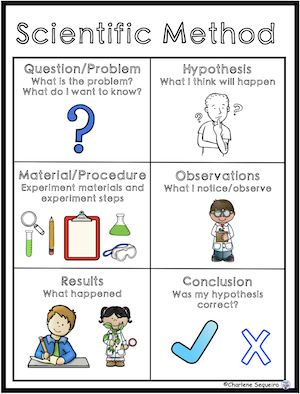 Check out this blog post for other experiments that might be fun to try. Here are a couple of resources that might be helpful as well. String Telephone Experiment Using The Scientific Method Scientific Method Happy experimenting! 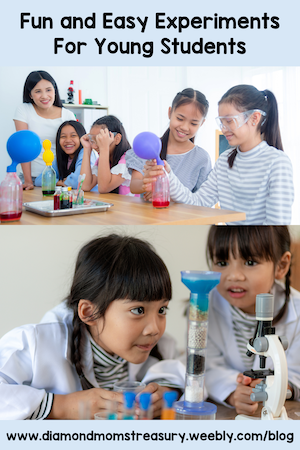 Related Posts
Kids are full of questions. Why is the sky blue? What are you doing? How does that work? It can be exhausting sometimes to keep answering them, but it is exciting to see the wonder and awe when they see new things. 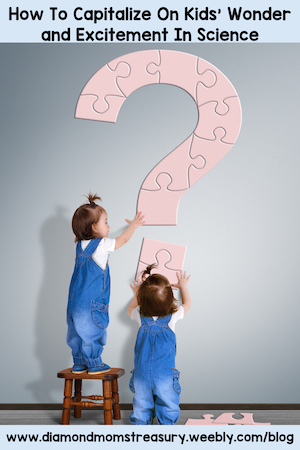 Science activities are a great way to capture that wonder and seek answers. Doing experiments is fun and can answer many of those questions. Creating experiments using the scientific method helps students to think through the necessary steps for controlling the parts of an experiment so that they can repeat when necessary to test out different hypotheses. It is important to have a question to answer before starting an experiment. Once you get your question, you can then make an educated guess or hypothesis about the outcome. This will help you to decide on the procedure and the materials needed to try to test out what you think might happen.  Here are some fun questions to ponder and maybe create experiments for. • Is there a way to drop an egg from the roof without breaking it? • How does a string telephone work? • How do large boats keep from sinking? • How can you make an egg bouncy? • How do airplanes stay in the sky? • How is electricity made? • How do magnets work?  Let's take a look at an experiment or activity that can be done to learn more about magnets. The objective of this experiment is to introduce primary children to the concept of magnets and their ability to attract certain materials. This hands-on activity combines learning with a fun scavenger hunt to engage and excite young learners. 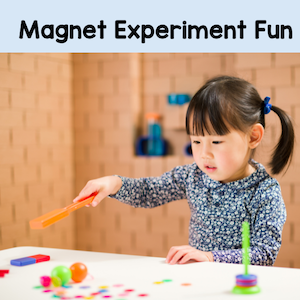 Question and HypothesesQuestion: Why do magnets pick up or stick to some materials, but not others? Ask students this question and get them to give you their hypotheses (These are their best guesses.) Materials NeededMaterials needed: - Small magnets (bar magnets or magnetic wands - Various objects made of different materials (paperclips, plastic toys, coins, aluminum foil, wooden blocks, corks, toy cars, etc. - Small containers or bags - Labels or cards with pictures of objects to find - Object checklist - Recording sheet - Pencil for recording 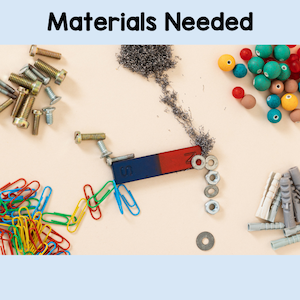 Material PreparationPrepare small containers or bags with labels or cards featuring pictures of the objects to find. Attach the object checklist to the containers. Scatter a variety of objects made of different materials around the room or outdoor areas. Hide some of the objects if possible. ProcedureGive each child a recording sheet, a magnet and a container or bag with labels or pictures of the objects. Attach a list to each container. Explain that their mission is to use the magnet to find objects around the room and record whether or not they are attracted to the magnet.  ObservationsEncourage the children to use their magnets to explore and observe which objects are attracted to the magnets. Have them record their observations on the recording sheet and check off the objects they find on their list. Results And DiscussionGather the children together to discuss their findings. Ask questions such as: - What objects did you find? - Were there any objects that the magnet didn't attract? - Were some objects easier to find than others? Check out the recording sheet and how the children classified the objects they found into the two categories: attracted to the magnet and not attracted to the magnet.  ConclusionConclude the experiment by reinforcing the idea that magnets have special powers and can attract certain materials. Introduce the concept that magnets attract objects made of certain materials, such as iron and steel. Check the hypotheses and see if they were correct or not and discuss why or why not based on what they discovered. Extension Or Follow Up ExperimentExplain that magnets have special powers to attract certain materials and that they have a north pole and a south pole. Create an experiment and opportunity for children to test out magnets and their poles to see how they can attract or repel based on which poles are facing each other.  This is just one example of how to capture wonder and excitement using the scientific method and experiments. There are so many different experiments to try. Enjoy exploring the world around with your students as they discover new and amazing things. Related Posts
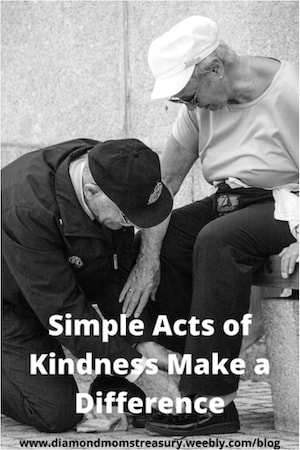
Teaching science to primary kids is a magical journey of discovery, curiosity, and boundless enthusiasm. By tapping into the innate sense of wonder that children possess, teachers can transform science education into a fun and exciting adventure. Let's explore creative ways to make science come alive for young minds, focusing on the wonders of nature and the marvels of scientific exploration. 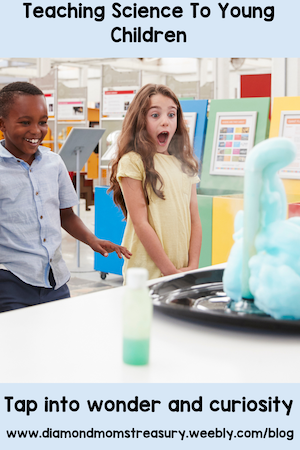 Embrace Hands On Learning And ExperiencesYoung children are natural explorers who learn best through hands-on experiences. Incorporating experiments and interactive activities not only makes science real but also creates a sense of excitement and discovery. Whether it's observing the growth of plants, creating simple chemical reactions, or exploring the properties of magnets, hands-on learning engages students and leaves a lasting impact. 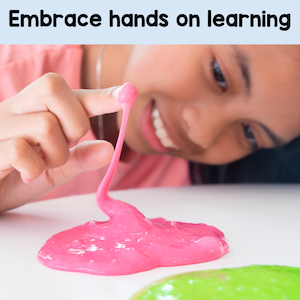 Explore NatureNature is the ultimate classroom for budding scientists. Take your students outside to explore the wonders of the natural world. From observing insects and birds to examining different types of rocks, the outdoors provide a rich learning environment that stimulates curiosity and develops a love for science. Nature walks, scavenger hunts, and outdoor experiments can turn a science lesson into an unforgettable adventure. 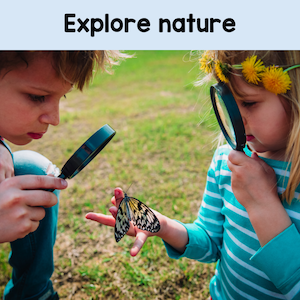 Create A Curiosity Driven ClassroomEncourage questions and nurture the natural curiosity of your students. A curiosity-driven classroom is one where students feel empowered to ask "why" and "how." This not only enhances their critical thinking skills but also opens the door to exciting scientific discoveries. Create a safe and supportive environment where curiosity is celebrated, and students feel comfortable exploring the unknown. 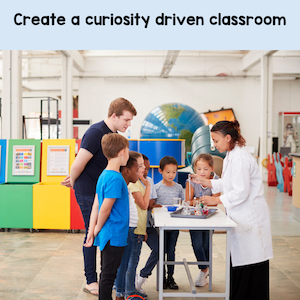 Include StorytellingWeave captivating stories into your science lessons to make abstract concepts more relatable. Whether it's the life cycle of a butterfly or the water cycle, storytelling adds a narrative element that captures the imagination of children. Consider incorporating picture books, interactive storytelling sessions, or even creating class stories that connect science concepts to real-world scenarios. 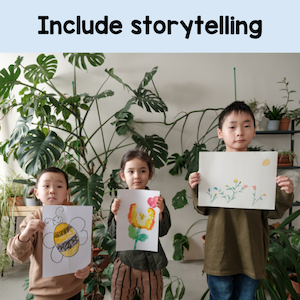 Use Everyday Objects In TeachingScience is all around us, and everyday objects can serve as fantastic teaching tools. Turn household items into science experiments or use them to demonstrate scientific principles. For example, a simple baking soda and vinegar volcano can illustrate the power of chemical reactions, while a magnifying glass can turn an ordinary leaf into a fascinating study of plant structures. 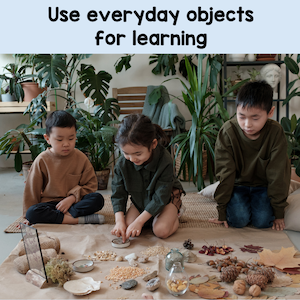 Celebrate Curiosity And Learning From MistakesIn the world of science, curiosity often leads to unexpected discoveries. Encourage students to embrace their curiosities and not fear making mistakes. Create an atmosphere where "failed" experiments are seen as opportunities to learn and refine hypotheses. Celebrate the journey of exploration, and help kids develop resilience and a positive attitude towards challenges. 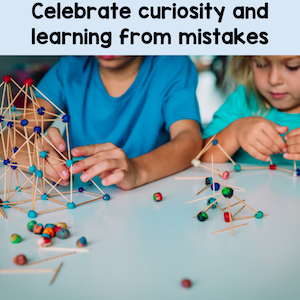 Teaching science to young children can be a joyful and rewarding experience when approached with creativity and a sense of wonder. By integrating hands-on activities, exploring the outdoors, fostering curiosity, using storytelling, and celebrating everyday objects, teachers can create an environment where science becomes a thrilling adventure. 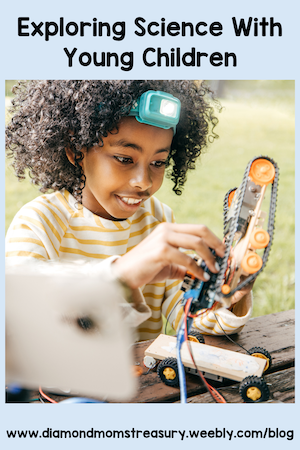 Have fun with these tips and help instill a lifelong love for learning and discovery in the hearts of our youngest scientists. Related Posts As the holiday season approaches, we find ourselves surrounded by the warm glow of Thanksgiving and Christmas. It is a time when families come together, delicious meals are shared, and joy fills the air. The holiday season, with Thanksgiving and Christmas at its heart, provides a perfect backdrop for teaching about kindness, compassion, and gratitude. 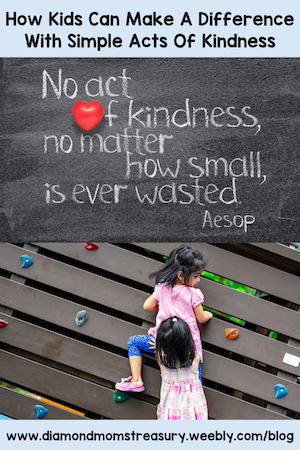 This is a time to think about how to add some festivities into our teaching as well as some special meaning. I love to use this time to help kids think about others and how we can make things happier or easier for them. Acts of kindness are a special focus at this time of year. Here are some ideas to try that might help foster a giving and caring spirit. 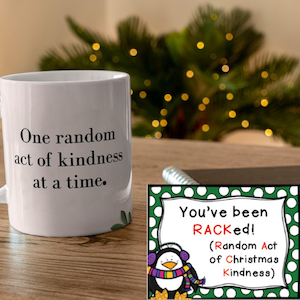 Counting Our BlessingsWhen we think of Thanksgiving, we think of all the things and people we are thankful for. We start to focus on what we have and we start to count our blessings. Often we need to have these reminders as we live in a world of "all about me" bombardment. There are several ways to share our thoughts. One that works well is a "Thankful Tree". Have your students craft leaves out of paper, and on each leaf, they can write or draw something they are thankful for. These leaves can be attached to a tree displayed in the classroom, forming a visual representation of gratitude. Another way to focus on things that they are thankful for is to create a gratitude journal and write things in it that they are grateful or thankful for. Incorporate gratitude journals into your classroom routine. Have your students write or draw one thing they are thankful for each day. This practice helps them focus on the positive aspects of their lives and appreciate the little things that often go unnoticed. Here is a fall gratitude journal that I created that might work for you.  Spirit Of GivingAs Christmas approaches, emphasize that the holiday season is not just about receiving gifts but also about the joy of giving. Share stories or read books that focus on the spirit of giving, such as "The Giving Tree" by Shel Silverstein or "How the Grinch Stole Christmas" by Dr. Seuss. Discuss how the characters in these stories experience joy and fulfillment through their acts of kindness.  Acts Of Kindness ActivitiesPlan classroom activities that promote kindness and compassion. Encourage your students to do things to brighten up someone's day and make it special. Create an "Acts of Kindness" calendar for the days leading up to Christmas. On each day, include a small act of kindness that students can perform. These can be as simple as saying a kind word to a classmate, helping a family member with a chore, or making a holiday card for someone in need. Make it a fun daily ritual in your classroom to share stories of these acts and celebrate the good deeds your students have done. Here is a set of coupons that might be fun to hand out to others. 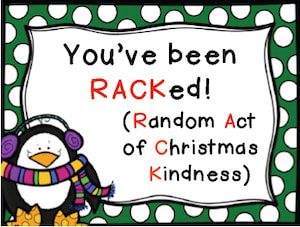 Provide opportunities for your students to participate in activities in the school community that provide service to others. This could include participating in a food drive, collecting toys for underprivileged children, or visiting a local nursing home to sing carols and spend time with the elderly. When children see the impact their actions have on others, it deepens their understanding of the true meaning of the holidays. 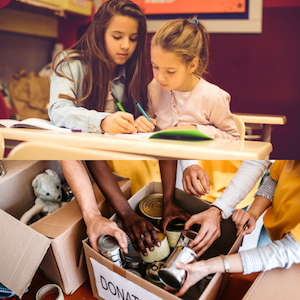 Different Holiday TraditionsEnsure that all students feel included during holiday celebrations. The holiday season is a great time to teach students about the diversity of cultures and traditions. Acknowledge and respect the diverse cultural traditions within your classroom. Teach your students about different holiday customs, fostering understanding and acceptance among classmates. Discuss various holiday celebrations from around the world. There are many different books that would work well for sharing the special holidays and celebrations that happen at this time of the year. The book "Horrible Harry And The Holidaze" shares aspects from several different holidays celebrated by different members from Harry's class. (My students enjoyed this because it was with characters they were familiar with from other books in the series.) 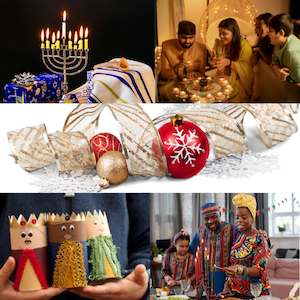 There are many other ways to help kids to develop a spirit of giving. It might be fun to include them in the discussion and find out ways they would like to try out. This gives ownership and helps them to feel valued as well. 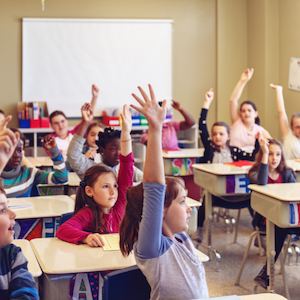 Teaching our young students about the significance of kindness during Thanksgiving and Christmas is a priceless gift that will serve them well throughout their lives. By incorporating these strategies into your teaching, you can make the holiday season a time of both joy and valuable life lessons. 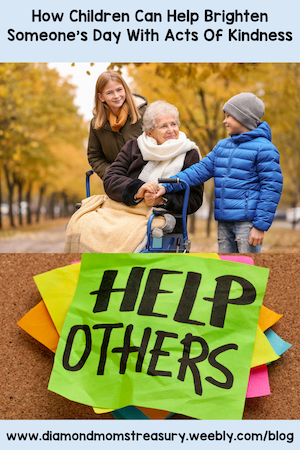 Let's inspire the next generation to embrace kindness, compassion, and empathy, creating a brighter and more compassionate future for all. Related Posts
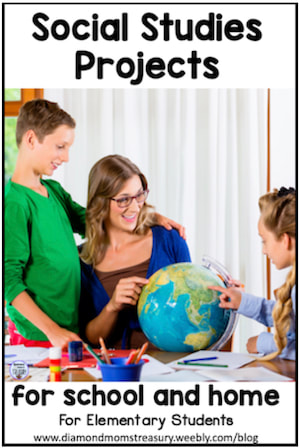
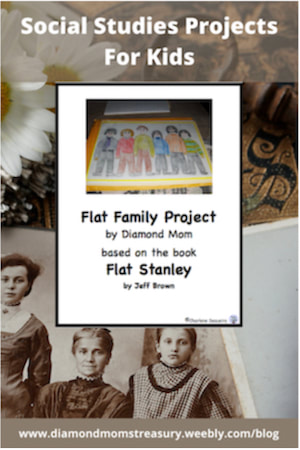
To say the pandemic has caused havoc in schools is an understatement. Teachers are burning out, kids are way behind in their academic progress, and mental health issues are at an all time high. We need to do something to turn this around or things are going to get even worse.  Teachers are stressed and taking medical leaves and there are not enough replacement teachers around to pick up the extra load. That means that classes are being covered by district staff, administrative staff and teachers that should be on their preps. This can't continue. We need to find some solutions to fix this.  Online learning was not equitable and so some kids were ahead of the game after spending months learning this way, while most kids were getting further and further behind. There could be many different reasons suggested for this: lack of access to technology, lack of one to one support, parents not feeling qualified to help or feeling overwhelmed with managing multiple children and their assignments as well as their own work loads, especially if they were working from home for different businesses. These are some of the suggested reasons.  For some children, working online didn't happen. Some kids were not tuned in to learning and they didn't even attempt to do the work. Others were too stressed by the online format. Others may not have had the necessary access to the technology. This caused wide learning gaps when the schools reopened and kids returned to in person learning.  As a volunteer in the school, I am still seeing the repercussions a couple of years later. Many kids in grades 3 and 4 are still struggling with basic facts, decoding written material, and basic writing tasks. They are requiring extra support, but there isn't enough to go around.  The tendency is to lower the expectations and teach to the lower end of the group, but this is not really a good option. Kids still need to be challenged and they need to be able to eventually handle more difficult work. Instead of lowering expectations, teaching in a different way may be better. Gone are the days of being able to teach whole class lessons most of the time. Instead, kids need to be given instruction that they can use and grow from there. One of the best ways to do this is to do small group targeted teaching. It requires more work at the beginning to get differentiated groups set up, but by using this approach, those that are struggling will have more success and begin to move faster towards approaching expectations. Those that are at level will get more meaningful instruction, and those that are exceeding levels will have some more challenging work that will keep them motivated to learn. 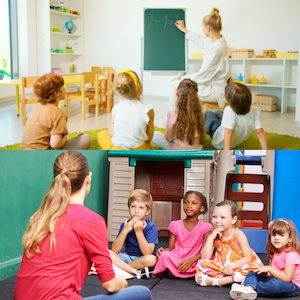 One option that might work is buddying up with another same grade class. Then kids could be regrouped together so that they are able to work on similar areas with differentiated materials that better match the needs of the groups. This is a method that has been used for guided reading groups at a couple of schools I've worked at. The key is to get enough people to keep the groups small enough to make them work successfully. Guided math groups could also be an option for differentiating instruction. 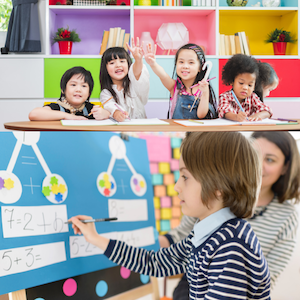 There is no quick fix for closing the gap or getting everyone up to expectation levels, but it's important to look for ways to keep kids engaged and learning. Those that are struggling will otherwise give up and those that are already meeting or above expectations will lose interest and motivation to keep pushing themselves.  I wish there was a magic wand that could change this, but there isn't. Teachers, you are doing so much to try to help your students in a tough situation. Hang in there. Even when some days feel somewhat hopeless, there are kids that are moving towards lightbulb moments. Celebrate those moments with them and count them as successes.  There's no better way to capture a child's interest and spark his imagination than to create things to demonstrate learning. This could be a model, a poster, task cards, a game, a diorama, a play, or a podcast just to name a few. When children are engaged and motivated, they tend to learn more deeply and they are more passionate about their project. 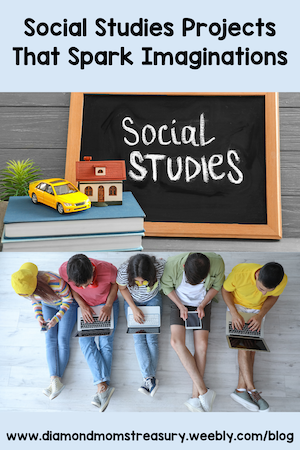 There are many different types of projects that can be done based on the subject and concepts that are to be studied. Today, I would like to focus on some projects that work well with the primary social studies topics of families and communities. Community projects and researchAssigning research projects where children investigate different aspects of their community, such as its history, economy, or cultural heritage and present their findings through presentations, posters, or multimedia projects develops research skills, information literacy, and a deeper understanding of the community's development. 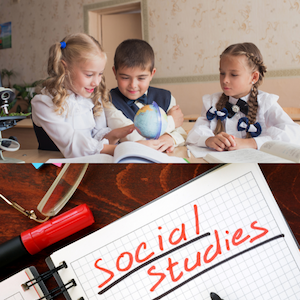 Heritage ProjectWe often study about families and look at family trees in the early grades. I wanted to take this further, so I developed a project that studied family heritage. To find out more about it and why it was important to me, check out this post. The goal of the project was to learn more about what make us unique and special. It was a great way to research different cultural aspects of various countries and share them with others. Check out the project here. 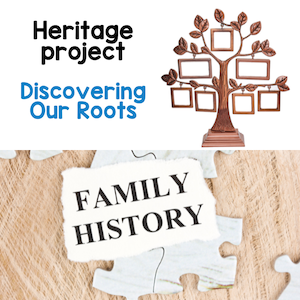 Flat Family ProjectMany people are probably familiar with Flat Stanley and the project that began with sending cutouts of Flat Stanley around the world and recording adventures with him. Then people began sending cutouts of themselves to record these adventures. I decided to take this a step further as part of our heritage studies. We created flat families and journals that we mailed to family members in different parts of the world. The families took photos of activities together and made journal entries to share. They returned these journals along with special mementos to the children. It was so exciting to watch the faces of the children when a package arrived and the contents were shared with the class. This Flat Family project has been set up for others to try. You can read more about it here. 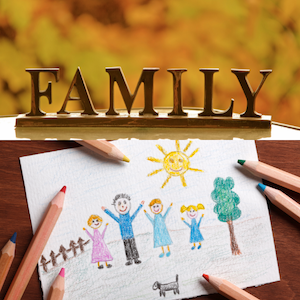 Creating A 3D Community ProjectLearning about communities and what they need is important. What better way to make sure that they understand what they have learned than to create a 3D community. This was a fun project that wowed the parents and other classes, not only because of its appearance, but also because of how much the kids could share that they had learned. Check it out here. If you would like to learn more about how we created it, check out this blog post. 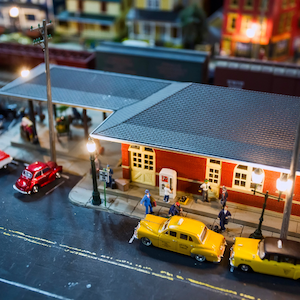 These are just 3 different projects that can be done. If you are interested in other projects, check out my social studies category. I hope you find doing projects as successful as I did.  Related Posts
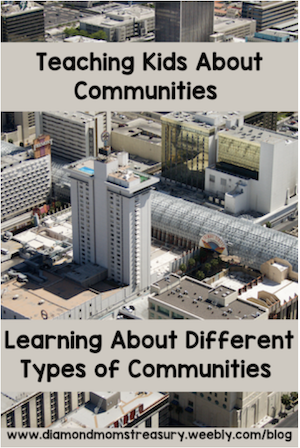
When thinking about communities, the story of the country mouse and the town mouse often comes to mind. Where we live becomes our reality and we often don't know much about other ways of life except through stories and pictures. It is important to broaden our horizons and discover more about the world around us and the different types of communities that make up our world. As teachers, we need to teach our students about communities and how they can impact our lives. Learning about communities, their importance, differences, and development can be an engaging and meaningful experience for children. 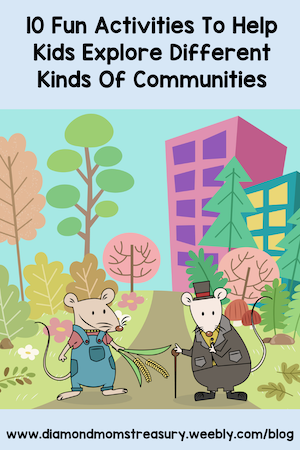 There are many different ways to help kids better understand what communities are, how they are the same or different, and why they are important. These could include field trips, community interviews, listening to guest speakers, role playing different community helper roles, participating in different community service activities, comparing different kinds of communities, creating community maps, exploring literature and listening to storytelling, participating in different cultural celebrations and creating a community project. Let's take a closer look. 1. Field TripsField trips are a great way to get a hands on experience. They can be done in a couple of different ways. 1. Arrange field trips to various community locations such as fire stations, libraries, local government offices, farms, parks, or historical sites. This gives the children the opportunity to observe, interact, and learn from community members. Encourage them to ask questions and make connections between the places they visit and the roles they play within the community. 2. Organize field trips to different types of communities within your region, such as urban areas, rural towns, or suburban neighborhoods. Visit local government buildings, parks, historical sites, or cultural centers. Encourage children to observe and compare the features, services, and characteristics of each community. 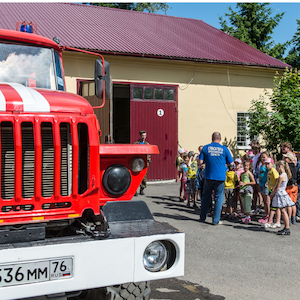 2. Community InterviewsEncourage children to interview community members, such as parents, grandparents, neighbors, local business owners, or local volunteers about their experiences and contributions to the community. They can ask questions about their roles, the services they provide, and the changes they have witnessed in the community over time. This activity promotes interaction, communication skills, and understanding of different perspectives. It allows children to learn about different perspectives, values, and the ways in which individuals shape and impact their communities. 3. Guest SpeakersInvite guest speakers from various professions or community organizations, such as local government officials, community leaders, or representatives from nonprofit organizations to talk to the children. They can share their experiences, explain their roles within the community, discuss the importance of their work, and talk about the development and unique aspects of their specific community. This firsthand interaction helps children understand the diversity of community roles and how they contribute to the well-being of society. 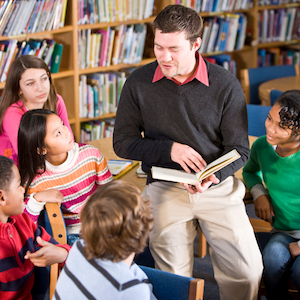 4. Literature And StorytellingRead books and stories that focus on communities and their development. Discuss the roles of different community members, the services they provide, and the ways in which they contribute to the well-being of the community. Encourage children to discuss the characters' experiences, values, and the significance of community in the story. Help them make connections and share their own stories or experiences related to their community. 5. Role PlayingSet up a dramatic play area where children can pretend to be community helpers or act out community-related scenarios. Provide props, costumes, and materials that represent various community roles like doctors, teachers, police officers, or shopkeepers. This hands-on experience allows children to explore different community roles and understand their responsibilities. 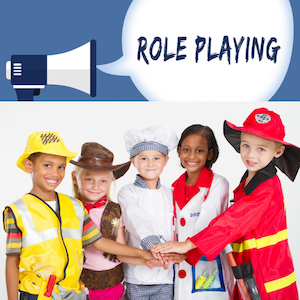 6. Community Service ParticipationEngage children in community service projects such as organizing a neighborhood clean-up, food drives, bottle drives, collecting donations for local charities, or planting trees in public spaces. These projects promote active involvement and an understanding of community needs. This hands-on experience helps them develop empathy, a sense of responsibility, and a deeper appreciation for their community. Children learn the importance of active citizenship and the positive impact they can have on their community. 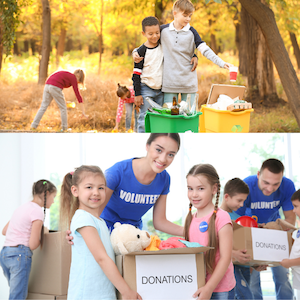 7. Different Kinds Of CommunitiesExplore different types of communities, such as rural, suburban, and urban areas. Discuss the similarities and differences between them, including aspects like housing, transportation, amenities, and services. This helps children understand the diversity of communities and the factors that shape their development. Here are some resources that might help. 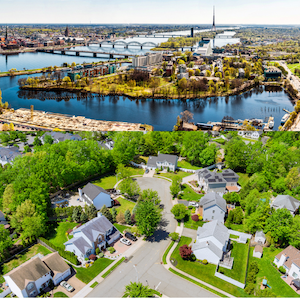 8. Community MapsHave children create maps of their own communities. They can include landmarks, places of interest, and community resources. They can identify and label places like schools, hospitals, parks, and grocery stores. Have discussions about the purpose of these places, their roles within the community, and how they contribute to the well-being of residents. Look at community maps of different places and types of communities. Compare and contrast the maps to highlight the diversity and uniqueness of each community. 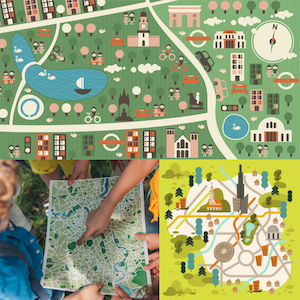 9. Cultural CelebrationsCelebrate and explore cultural diversity within the community through festivals, cultural events, or international days. Invite families to share their traditions, music, dance, or cuisine with the children. This helps children recognize and appreciate the diversity within their community and promotes understanding and acceptance of different cultures. It helps them understand that communities are made up of people from various backgrounds. 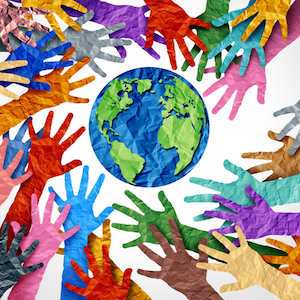 10. Community ProjectEngage children in community development projects for their school, such as creating a community garden, or planning a recycling program. Allow them to brainstorm ideas, collaborate, and take action to address school community needs. This hands-on involvement fosters a sense of ownership and empowers children to contribute to the betterment of their community. 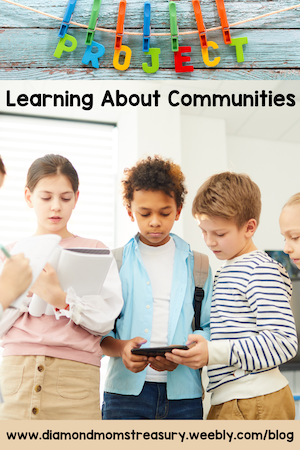 Have fun with these activities and teaching your students. Related Post
|
About Me Charlene Sequeira
I am a wife, mother of 4, grandmother of 9, and a retired primary and music teacher. I love working with kids and continue to volunteer at school and teach ukulele. 

Categories
All
|


 RSS Feed