Welcome To My Blog |
|
Welcome To My Blog |
|
|
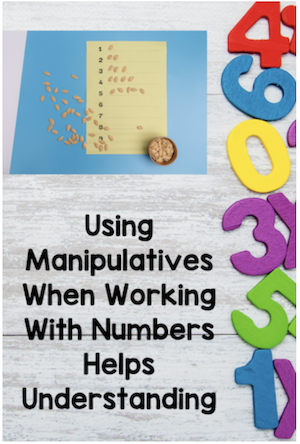
Watching kids "get it" is exciting. There is that confusion and frustration at the beginning that gradually changes as things begin to make sense. Suddenly the light bulb goes off and the smiles appear. There is a definite sense of "Aha". This is often the case in math when kids work with concrete materials. Hands on activities and manipulatives made the difference. That is the magic of using hands on activities and manipulatives to teach basic concepts in math. Here are some different types of games and activities as well as resources that may help as you venture into teaching with concrete examples.  Number senseBefore kids can move forward in math, they have to understand what numbers are and be able to work with them. This includes recognizing what the numerals look like, counting objects, making one to one correlation with the number and the object, etc. Counting by one, two, five, and ten can all be done with concrete objects. It's important to make sure that there is understanding of one concept before adding in the next one. Counting by one: Start with picking up objects one at a time and counting them sequentially. Try counting up to five, then ten, and then twenty. Practice this until they can do it without help. Pointing at objects as they are counted also works. Make sure to also work on counting objects that may not be lined up but are in random positions. Counting by two: Once they are able to count by one without prompting, start introducing counting two together. There are several ways to do this. It is important that they understand that they are counting two objects at a time. You could put the objects in pairs and have them count by saying the odd numbers quietly and the even numbers loudly at first, and then have them say the odd number inside their head and the even number out loud. With practice, they will be able to say only the even numbers and do the skip counting by two. Counting by five and ten: Counting by five and ten require a good understanding of larger numbers. Practice using number lines and hundreds charts to expand to larger numbers and do lots of activities to help kids see how these bigger quantities work. Then work on patterns and skip counting by five and ten. Use things like hands or coins for visually counting by five or ten as well. 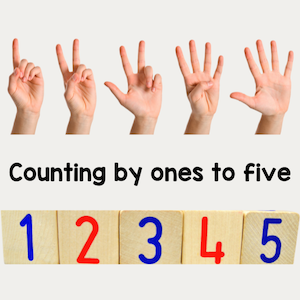 Teach children that numbers have many representations, such as dots, fingers, counters, numerals, objects, ten frames, etc. The goal is to help them to see patterns and relationships between the numbers and objects. The goal is to help them to start understanding how different concepts like more, less, equal to, greater than, less than, etc work. Basic facts for addition and subtraction followed by multiplication and division are also part of number sense. Number sense is key to all aspects of math. It is important to make sure that kids have a solid understanding of how numbers work and the relationships between different operations happen in order to ensure that they will be successful with more abstract and complex concepts. 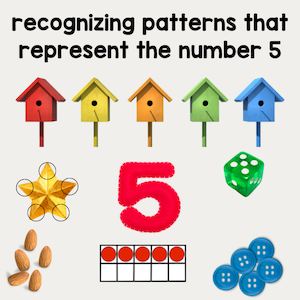 Basic factsWhen we refer to basic facts, we usually mean adding and subtracting single digit numbers. It's important to have a good understanding of these facts and how they work in order to do more complex math questions. Games are a great way to work on these. Start by working with numbers that add up to ten. Making tens is a key concept for many different other skills and concepts. Using dice work well for teaching basic facts to ten. Check out the video below to see how I used dice for teaching how to make tens. 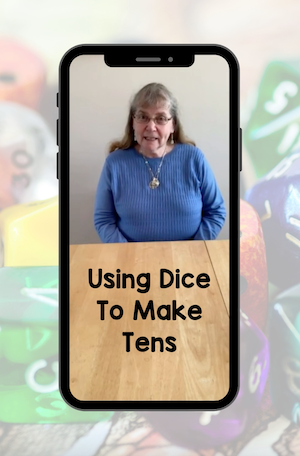 Ten framesUsing ten frames is another great visual for how to make ten. Working with ten frame cards or placing objects in containers that represent ten frames help kids to see when they have a ten and how many are needed if they have a number that is less than ten. The more they see these visuals, the easier it is for them to quickly recognize numbers up to ten and what numbers go together to make ten. Check out this video to learn more. 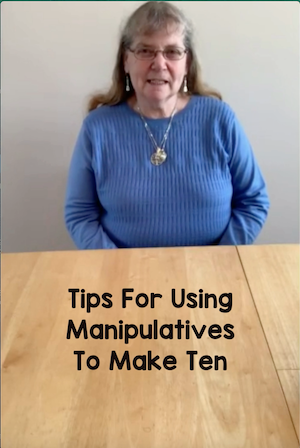 I loved using these ten frame cards to play games with my students. They had fun, and they became very good at recognizing similar numbers quickly. Playing "Snap" added an element of friendly competition. Another fun activity was playing with teams using the large cards. One person from each team came forward and as the cards were shown, whoever got the answer correct first got the card. When the cards were all played, the person with the most cards got a point for the team. Then the next two players came up. The cool thing about this, was that all the others saw the cards at the same time and they could mentally practice recognizing the numbers while waiting for their turn. 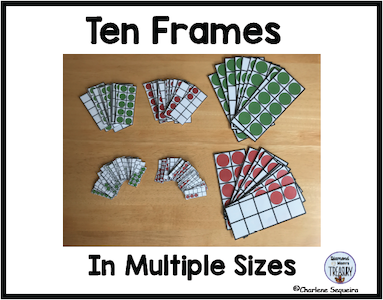 Once kids have a good understanding of how to make ten, they will be more prepared for the rest of the numbers needed for basic facts. Knowing basic facts is important for working with the different math operations successfully. There are many different strategies for working with addition and subtraction to practice basic facts. I will share more about this another time. 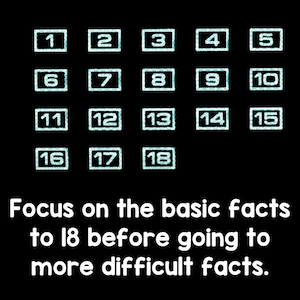 There is a danger in trying to move kids to abstract concepts too quickly. Take the time to have them work with concrete examples and you will find that the abstract situations will be much easier for them to understand and grasp. When I worked with several students that struggled in early intermediate grades, I found that returning to the basics and using the concrete activities made a world of difference not only to their understanding, but also to their confidence and engagement. It was exciting to see them find light bulb moments and attempt more difficult concepts as a result. 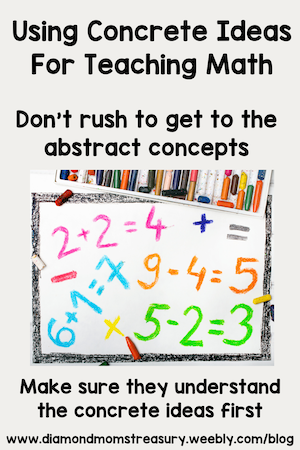 Next time I will focus on more skills such as how to represent numbers using base ten models as well as fact families and number bonds. I will also show some other ways to represent numbers as we move from concrete to ablstract.   Related Posts
Comments are closed.
|
About Me Charlene Sequeira
I am a wife, mother of 4, grandmother of 9, and a retired primary and music teacher. I love working with kids and continue to volunteer at school and teach ukulele. 

Categories
All
|
 RSS Feed