Welcome To My Blog |
|
Welcome To My Blog |
|
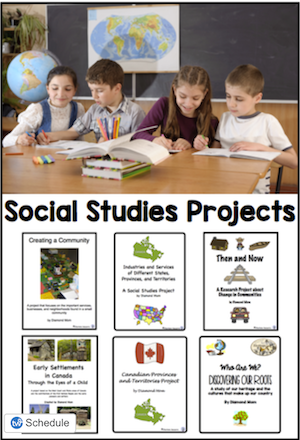
Teaching Has Been ChallengingTeaching during a pandemic has been challenging for teachers. They have been struggling to meet the needs of their students during a time of constantly changing teaching situations. Some teachers are still teaching remotely while others are teaching in-person or doing a combination of the two. Kids are struggling or flourishing or somewhere in between. This leads to a huge range of learning needs in a classroom. Teachers are looking forward to the end of the year and a break from all of this. However, it is important to think about how things may be different when school resumes in the fall. 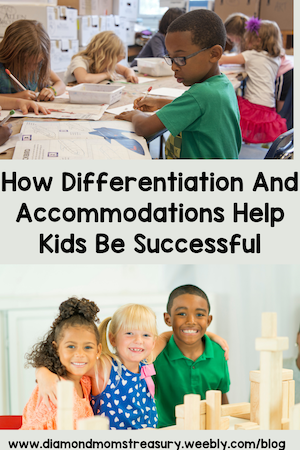 The Need For More Differentiated TeachingAs we start to move forward from the pandemic and head towards a more "normal" classroom situation, it is really anything but "normal". There are huge learning gaps for some kids and yet the expectations are the same for them to be functioning at "grade level". In order for this to happen, we will need to make many adjustments and accommodations in the classroom and in our teaching. The need for differentiated teaching will be much greater as we help our students move towards grade level expectations again. It is important that we continue to keep working towards this and not lower our expectations because of the wide range of needs in the classroom. 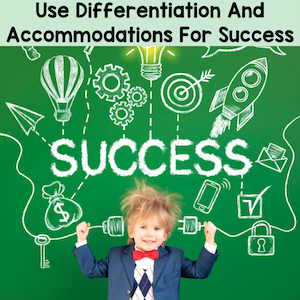 We will need to be flexible in our teaching to make sure that we are able to accommodate the learning needs of all our students. I recently listened to a couple of podcasts from a fellow Canadian teacher, Patti of Madly Learning, that hit home with me. Here are a couple of nuggets from her podcasts. Instead of saying "this is too hard", say "our students are not ready yet, but they will get there". "Accommodations are when we are changing how a student is completing their work. It is different from modifications because we are still expecting students to complete the same level and complexity of the work as another student. We're expecting students meet grade level targets and demonstrate grade level knowledge and understanding of concepts but how they get there is different from other students." She also used the analogy of a platform being the grade level target and ladders being the means to help get the students there. She emphasized that we not lower the platform, but that we meet them where they are and give them the ladders they need to help them get where they need to be. 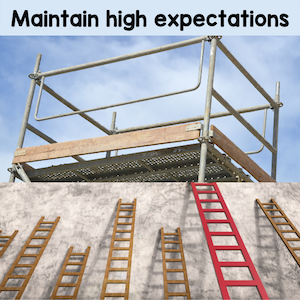 I have been an advocate of differentiated learning and accommodating choice to best highlight a student's knowledge and understanding for a few years now, and I saw much success when I implemented this into my teaching. I realized early in my teaching career that teaching whole class lessons worked for some kids, but left others either lost and overwhelmed or bored and inattentive. This led to developing small group activities and lessons that still focused on the skills and concepts required, but made it more appropriate for the needs of the kids. Most Classrooms Are Academically DiverseNowadays, there are often split classes with two grades combined. Here is a possible scenario from a late primary class. In the same class there are students who are struggling with phonemic awareness and connecting sounds and written language, students that are emergent readers with simple decoding skills and reading abilities, students that are reading beginning chapter books, and students that are advanced readers that can handle novels and nonfictional material with ease. The writing abilities are widely different as well. Some are still writing simple sentences with little or no detail and description. Some are struggling to get started because they are unsure of how to spell words. Some are writing detailed and descriptive stories. These same children have varying levels of competency with math concepts ranging from simple number recognition to more complex computational skills. They may be strong in math but struggle in reading, or they may be strong in reading, but struggle in math. Perhaps they are strong in both subject areas or weak in both subject areas. Obviously, these strengths or weaknesses can carry over into other areas of the language arts, social studies, and science. Now, imagine having to cover a set curriculum for all of these kids with the wide range of readiness skills that they have. No wonder teachers are stressed out. 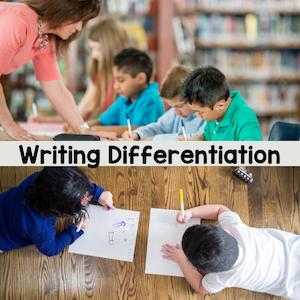 Differentiation Is Essential For SuccessDifferentiation will not only be helpful, it will be essential in situations like the one above. We can no longer do whole group lessons and expect that this will meet the needs of all the students. Some will be totally lost, and others will be bored because they need more of a challenge. Only some of the kids will benefit from the lesson. It is possible to do some whole group instruction, but it will need to have differentiated activities and extensions to go along with it in order to meet the needs of all the kids. This differentiation can be small group activities, one on one support, hands-ons practice, extra research activities, etc. The topic, requirements, and specific student needs will dictate how best to differentiate the lesson. The goal is to ensure that the students can understand the concept taught and use the skills practiced. They will also need a way to share their knowledge and understanding. This could be in a wide range of different means that will best suit their individual strengths. 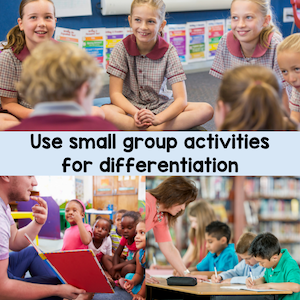 Provide A Solid FoundationMatching up lessons and curriculum requirements can be tricky, but it can be done if we look at the overall big picture and what is most important. From there, different activities can be provided to include these big ideas in a way that helps all students to participate and gain a better understanding. In my opinion, it is more important to make sure the students understand the concepts first before moving on to new material or concepts. Otherwise, we are leaving them feeling overwhelmed and frustrated. We still want them to learn the more complex material, but it will need to have a solid foundation in order to truly be applied. I worked with several older students supporting them in math prior to the pandemic. It was amazing to see how weak they were with basic computational skills. They were unable to do the work given in class because they didn't really understand the basic concepts needed to complete the work. Once we spent time solidifying the basic skills, they were able to move on. They started to feel confident and they were more willing to attempt new concepts. This may mean that it will take a bit longer to get to the more complex concepts and skills, but kids will be more successful when they are introduced. 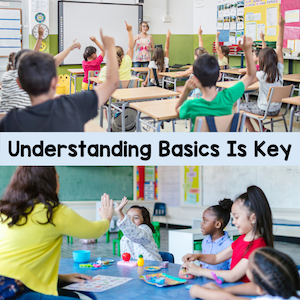 Make Accommodations Based On Student NeedsI have always been a big advocate for hands-on learning. If we focus on the concrete first, when we move to the abstract, it will make more sense. This is particularly true with math. Even older students sometimes need to have some hands-on experience in order to understand the concepts. With basic facts, I often used dice or base ten blocks to help with the visualization of the concept of making tens, adding, subtracting, grouping, etc. From there, I would focus on the more abstract concepts of math. Some kids were able to make the transition easily and didn't need the visuals to be successful. Others needed to continue to use visual cues to fully understand the concepts. That's okay. Some people are visual learners and that works well for them. It is important to know your students and make your accommodations based on what they need. Giving kids a solid foundation in math when they are young will help to make sure that they are ready for more complex and abstract situations that they encounter in the real world. 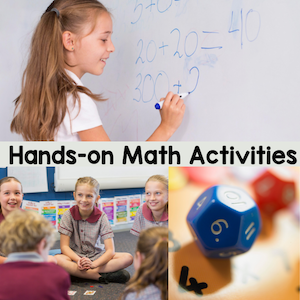 Guided reading was my go to with reading and the varying levels of kids. This allowed me to work with specific concepts and ideas that were tailored to the needs of the kids in the different groups. Through rotations and small group activities, those who needed more one on one support got extra teaching time and the others got to do activities that extended what they were working on. I have shared how I ran my groups and how you can set up guided reading in the primary classroom in previous posts. 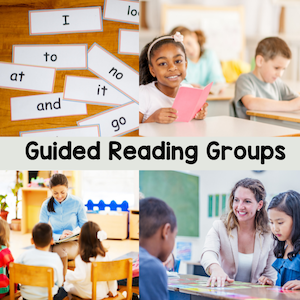 For social studies, I created projects that allowed the kids to show their learning in a variety of different ways. This gave those who struggled with reading or writing, but were strong in other areas, a chance to shine. It was amazing to see them share their knowledge with pride and confidence when they did things this way.  The hands-on nature of science through experiments and observations also works well and requires less differentiation. Working in pairs often helps when recording information or reading instructions is necessary. One can help the other with this. There can also be some choice and differentiation here for some situations. My solar system project is a good example of this. In-class science fairs, where kids can have choice of projects or experiments to investigate and share, is another great way for kids to share their knowledge and understanding of scientific concepts. 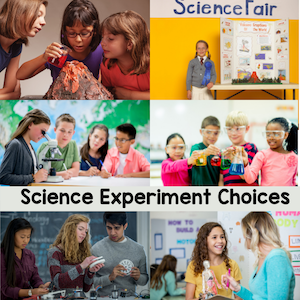 As you think about next year and the demands that it may have due to the gaps created during the pandemic, I hope some of these suggestions will help you with your planning. I wish you the best as you near summer break and a well deserved rest.   Related Posts
0 Comments
Leave a Reply. |
About Me Charlene Sequeira
I am a wife, mother of 4, grandmother of 9, and a retired primary and music teacher. I love working with kids and continue to volunteer at school and teach ukulele. 

Categories
All
|

 RSS Feed